Identify where the water will flow and who controls the proposed destination before approving exterior cleaning. Stormwater drainage, sanitary sewer acceptance and off-site disposal are different decisions. A nearby drain, a biodegradable cleaner or collection equipment does not itself establish permission to discharge. The responsible authority must evaluate the actual address, waste stream and proposed route.
What are the four different routes?
| Route or system | What it means | What remains to verify |
|---|---|---|
| Storm drain | Part of the local stormwater drainage network | Keep polluted wash water out; ask the stormwater authority about the site plan |
| Sanitary sewer | A wastewater collection system serving the property | Receiving utility’s acceptance, connection and conditions; not automatic permission |
| On-site collection | Capturing liquid and solids before they leave the work area | Storage/handling and an authorized final destination |
| Off-site disposal | Transport to a receiving location | Facility acceptance, waste characterization and applicable transport requirements |
This is a planning framework, not a design for containment or a permit determination. The contractor must establish a workable approach for the site and actual materials. A storm-drain cover alone is not proof that the system captures every flow, remains safe in rain or provides a disposal destination.
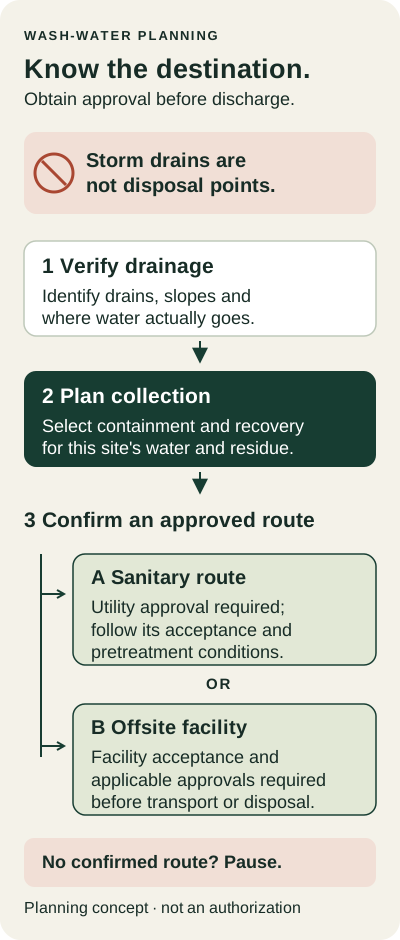
Who should you contact in Kansas City, Missouri?
For a KCMO property, use KC Water’s stormwater program for local stormwater-system questions. Separately, its Industrial Pretreatment Program regulates industrial wastewater within its service scope and determines the need for a permit or other discharge authorization. The program lists 816-513-0600 and water.ipp@kcmo.org for pretreatment questions.
Ask whether the proposed wash-water stream and receiving point are acceptable and which information is required. Do not read a threshold for one category of industrial user as an exemption for all other discharges. Do not assume a combined sewer area makes a street inlet an approved disposal point. The utility should address the actual proposed connection and conditions.
Who should you contact in Kansas City, Kansas?
Start with the Unified Government’s Public Works / Water Pollution Control functions for the KCK address, separating stormwater questions from sanitary wastewater/pretreatment acceptance. Its official Stormwater Overview explains the stormwater program, and its industrial pretreatment system procurement document identifies Water Pollution Control’s sewer and stormwater responsibilities.
These are dated official program documents, not a current pressure-washing permit determination. Use the Unified Government service directory to obtain the current contact for the proposed address and waste stream. Ask for the current application/acceptance process; do not apply KC Water’s Missouri process to KCK or infer that a residential car-washing exception covers commercial apartment cleaning.
What changes in Overland Park and Johnson County?
Overland Park’s sustainability guidance explains that stormwater reaches streams and rivers without treatment, carrying pollutants picked up along the way. The city’s department directory identifies Public Works as responsible for stormwater services. Direct stormwater questions to the city; sanitary sewer acceptance belongs to the utility actually serving the property.
Where Johnson County Wastewater is the receiving utility, its industrial permitting page describes Special Wastewater Disposal Authorizations for certain nonroutine discharges and other permit categories. It directs applicants to discuss their industry-specific requirements at 913-715-6956. That does not establish that every washing job requires that authorization, or that every Johnson County address is in JCW’s service area.
For Lenexa, Shawnee, Leawood, Olathe, Prairie Village or another community, confirm municipal stormwater jurisdiction and the actual wastewater provider separately. A county name or mailing city alone does not answer both questions. Use the service-area planning page to organize that distinction before issuing the work scope.
What information should the inquiry include?
Prepare a short packet the authority can evaluate:
- Exact site address, city/state, parcel/site plan and property contact.
- Receiving wastewater utility and proposed connection or disposal facility, if known.
- Surfaces and coatings to be cleaned, observed soils and any unusual contaminants.
- Proposed cleaning products, labels and safety data sheets.
- Expected water quantity, duration and schedule, labeled as estimates until confirmed.
- Drain locations and flow paths, including where runoff might cross property boundaries.
- Proposed collection, solids separation, storage and final disposal method.
- Contractor contact and specific question: acceptance, required testing, authorization or restrictions.
Ask the contractor to supply technical details you cannot verify. Do not fill blanks with a generic flow rate or chemical dilution from another project. Retain written guidance, conditions, authorization identifiers and the scope revision they apply to. A change in product, destination or waste characteristics may require a new review.
What about water supply?
Confirm permission to use the property’s connection, its availability during work and any connection/backflow requirements with the responsible utility or qualified contractor. Hydrant use, temporary meters and water delivery have their own arrangements. A water supply agreement does not authorize wastewater discharge.
Record the plan in the bid scope so one contractor is not pricing approved recovery/disposal while another assumes uncontrolled runoff. Ask what happens if rain overwhelms the planned controls, the receiving facility declines the waste or the expected connection is unavailable. An unresolved destination should remain an explicit stop point.
What should remain in the property record?
Keep the authority response, accepted route, responsible contractor, dates and any required disposal documentation with the project file. The completion walkthrough should confirm that agreed documentation was delivered; a clean-looking sidewalk does not prove compliance.
For building washing and common-area concrete cleaning, resolve this planning step before the contractor locks in equipment and price. Return to the complete property-manager guide for the wider project sequence. Sources checked October 1, 2026; confirm the current site-specific requirements before work.